Website & booking engine
How a property blog helps Google find you for local questions, and how the Direct Belize journal turns a topic into a draft your staff edit and publish.
Mark Noble, Direct Belize · 8 November 2026 · 6 min read
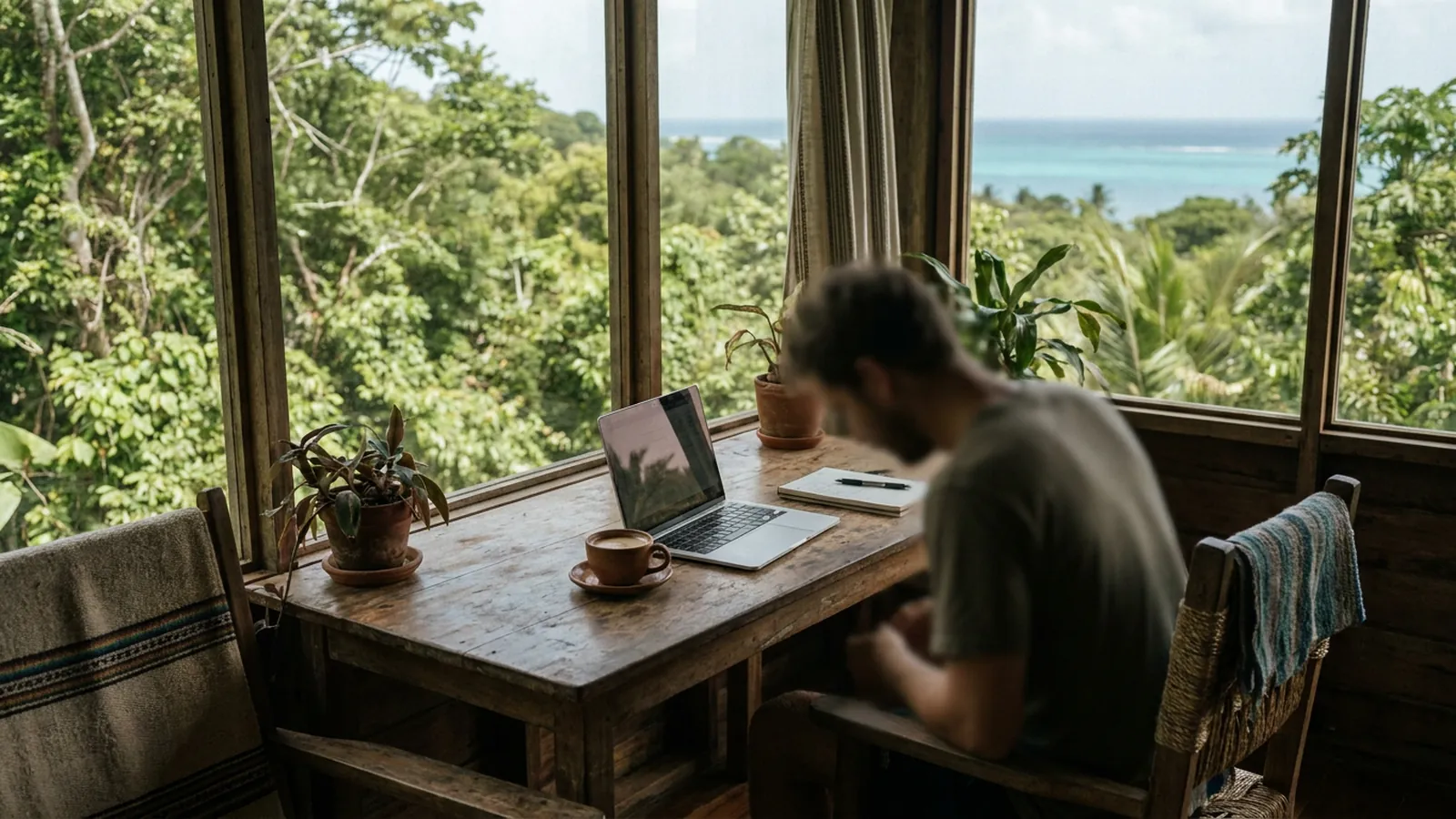
Someone in Texas opens their laptop in November and types "where to stay near Caracol". Someone else types "San Pedro with kids" or "is Hopkins good in rainy season". They are not typing your property's name, because they have never heard of it.
Those searches land somewhere. Usually on a big travel site, a forum thread from years ago, or a blog written by someone who spent four days in Belize. Occasionally they land on a small lodge's own website, because that lodge happened to have written the page that actually answers the question.
That last one is the opening. It is slow, it is unglamorous, and it is the cheapest guest acquisition a small property has.
Why writing beats advertising for small properties
The numbers people report here are fairly consistent. Google search traffic to hotel sites converts at roughly 3–8%. Meta ads convert at 1–3%. Someone who searched for a thing and found your answer is already further along than someone who was scrolling and got interrupted.
The kind of content matters too. Local and destination writing — what to do, how to get there, what a day actually looks like — outperforms promotional posts for hotels. Nobody searches for "our beautiful rooms with hand-carved furniture". They search for how long the drive from the international airport takes, whether the road to the lodge needs four-wheel drive, and what there is to eat after seven in the evening.
This is also worth saying plainly: the booking sites bring you guests and they earn their commission on those guests. That is a fair trade for someone who found you on Booking.com and would never have found you otherwise. What costs you money for nothing is the guest who searched for Placencia, read your page, and then went and booked you through an OTA anyway. Hotels report that guests acquired through Google's own hotel search cost 40–60% less than the equivalent OTA commission, and a guest who arrives on your site through your own writing costs less again.
What the journal module actually does
The honest problem with property blogs is not that owners don't know they should write. It is that it is Tuesday, two rooms need a plumber, a group arrives Thursday, and the blog has not been touched since March.
The journal in the Direct Belize admin is built around that. You give it a topic. It produces a draft in your property's voice, using your own facts — your location, your rooms, your rates, what you actually offer. A person on your staff reads it, fixes what is wrong, adds what only you know, and publishes.
The draft is a starting point, not a publication. Nothing goes live until someone who works at the property has read it and pressed publish. That matters more than it sounds, because the mistakes a draft makes are the specific ones: it will get a road name slightly wrong, or describe a tour you stopped offering last year. Your front desk person catches that in thirty seconds.
Once published, the post sits on your own website on your own domain, with the images sized properly for mobile and the feed updated. No separate blogging platform, no second login, no plugin to keep patched.
The draft is the cheap part. The judgement about what is true for your property — that stays with your staff, and it is the whole reason the post is worth reading.
You can see where this sits alongside the rest of the site at /features#website.
What a small property should write about
If you have six rooms and one person who handles everything, do not try to be a travel magazine. Write the answers to the questions you are already answering by email, over and over.
- The journey. How guests actually get to you from the airport, what it costs in BZ$, which bus, which water taxi, which turning past the village.
- The one-day itinerary. What a guest with a single full day in Cayo should do, in order, with realistic times.
- Seasons, honestly. What June looks like. What the rain does to the roads. Why some people prefer it.
- Who it suits. A page about San Ignacio with young children. A page about which rooms work for a couple who want to be left alone.
- The practical. Where the nearest ATM is in Punta Gorda. Whether there is phone signal. What time the restaurant stops serving.
Each of these is a page that can rank, because very few people have bothered to write them properly. They also do a second job: they filter. A guest who reads your honest page about the road in and books anyway is a guest who will not complain about the road.
A handful of posts a year, done well, is enough for a small guesthouse. One good page about Caracol that is still being found a few years from now is worth more than twelve thin posts published in a rush.
Keeping a rhythm at a larger property
A 25-room hotel with a marketing person is a different problem. There, the risk is not neglect but drift — four posts in January, nothing until August.
The same admin runs both, which is the point. The difference between a two-person guesthouse and a 25-room property with a front desk, housekeepers and a marketing person is how many staff logins are in use and what each one is allowed to do, not a different system.
So you can give your marketing person Create and Edit rights on the journal and nothing else. A read-only role for the owner who wants to see drafts before they go up. Preset roles exist for administrator, front desk, marketing and read-only, and you can build custom ones if your shape is unusual.
A rhythm that works: one post a month, planned a quarter ahead, tied to what is actually happening. Lobster season. The start of the dry season. A new tour operator you have started working with. Local events already sit in the market intel calendar, so the planning is partly done for you.
The social post planner can take the same material onward — captions drawn from your own photographs, everything approval-gated before it publishes. Write the post once, use it three ways.
Where to start
Pick the question you answer most often by email this month. Write that one. Put it on your site, with your phone number and your booking engine on the same page.
Then do it again in four weeks.
Setup for a new property is typically done within a couple of weeks, and the website, the domain and everything written on it belong to the property. Plans run from 1–6 rooms up to 15–25, with larger properties set up individually — details on pricing.
Sources
- 1.Direct Belize — Features — what the journal, staff permissions and website module include.
- 2.Direct Belize — Pricing — plan bands by room count.
- 3.Mediaboom — Hotel content marketing — local and destination content outperforming promotional posts.
- 4.GetHostAI — Hotel marketing conversion benchmarks — search versus social conversion ranges.
- 5.Track360 — Google Hotel Ads vs OTAs — reported cost of Google-acquired guests against OTA commission.