Website & booking engine
Most overnight guests in Belize arrive from the United States. Practical ways to shape your direct booking site around how they search, plan and pay.
Mark Noble, Direct Belize · 22 September 2026 · 6 min read
Belize recorded roughly 551,700 overnight arrivals in 2025, up 0.8% on the year before, according to the Belize Tourism Board. The United States supplied 59.4% of them.
Look at a full year by source market and the shape holds: 64.8% from the USA, 7.1% from Canada, around 8.1% from Europe (3.1% from the UK, 1.9% Germany, 1.4% France), 6.4% from Central America and 1.5% from Mexico.
Rounded off, about six in ten of the people who sleep in your rooms flew in from the United States. That is not a marketing insight so much as a design brief. If your own website is built for the guest who is actually coming, it does a better job of converting the ones who have already found you — and those are the bookings you would rather not pay commission on.
Who the typical guest actually is
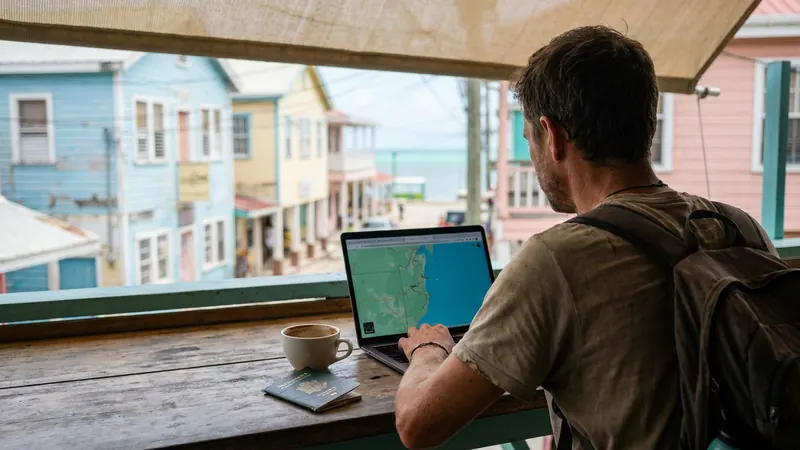
Picture the booking as it really happens. A couple in Houston or a family outside Atlanta has decided on Belize, not on your guesthouse. They have been on a booking site, maybe two. They have seen your photos. Then one of them types your property name into a search bar to see whether you have a website of your own.
That is the moment that matters. They are not discovering you — the booking sites did that, and they have earned their commission on the guests who found you there. This person already knows who you are and is checking whether booking direct feels safe and sensible.
What makes it feel sensible is small and unglamorous. Prices they can read without doing sums. Dates in the order they expect. A clear answer to "how do we get there from the airport?". A page that loads on a phone with patchy roaming data while they are still at work.
Prices in both currencies, dates in their order
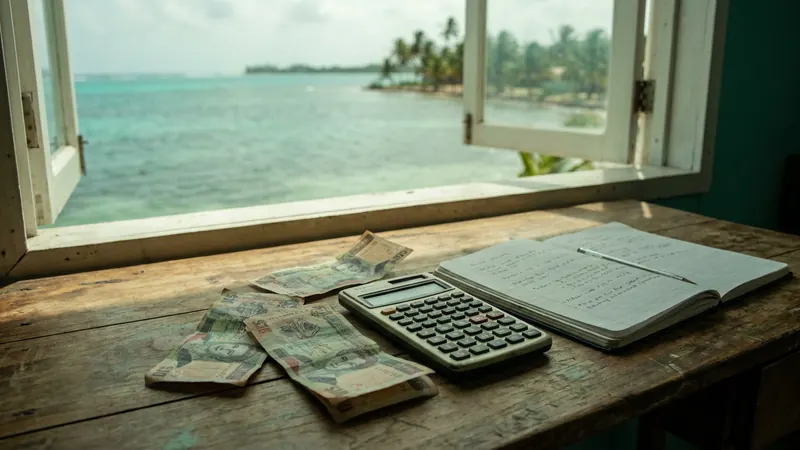
The Belize dollar is pegged at BZ$2 to US$1, which is a gift. A visitor from Dallas does not need an exchange-rate app, only confidence that someone has done the halving for them.
Show both. BZ$ first if you like, with the US$ figure beside it. The rate is fixed, so there is no risk of the two drifting apart, and you remove a moment of hesitation at exactly the point where people abandon a booking form.
A few other habits worth adopting:
- Write dates the American way where the guest will read them, or better, spell the month out in full so there is no ambiguity. A date written as two numbers with a slash means two different weeks depending on where the reader was raised.
- Give times with am and pm rather than a 24-hour clock.
- Say what the deposit is, in both currencies, and say where the rest is paid. If you take a deposit through your own Stripe account and the balance at the property, say so plainly.
The point of all this is not to be clever. It is to remove the three or four small doubts that make someone close the tab and go back to the booking site.
A "how to get here" page that earns its place
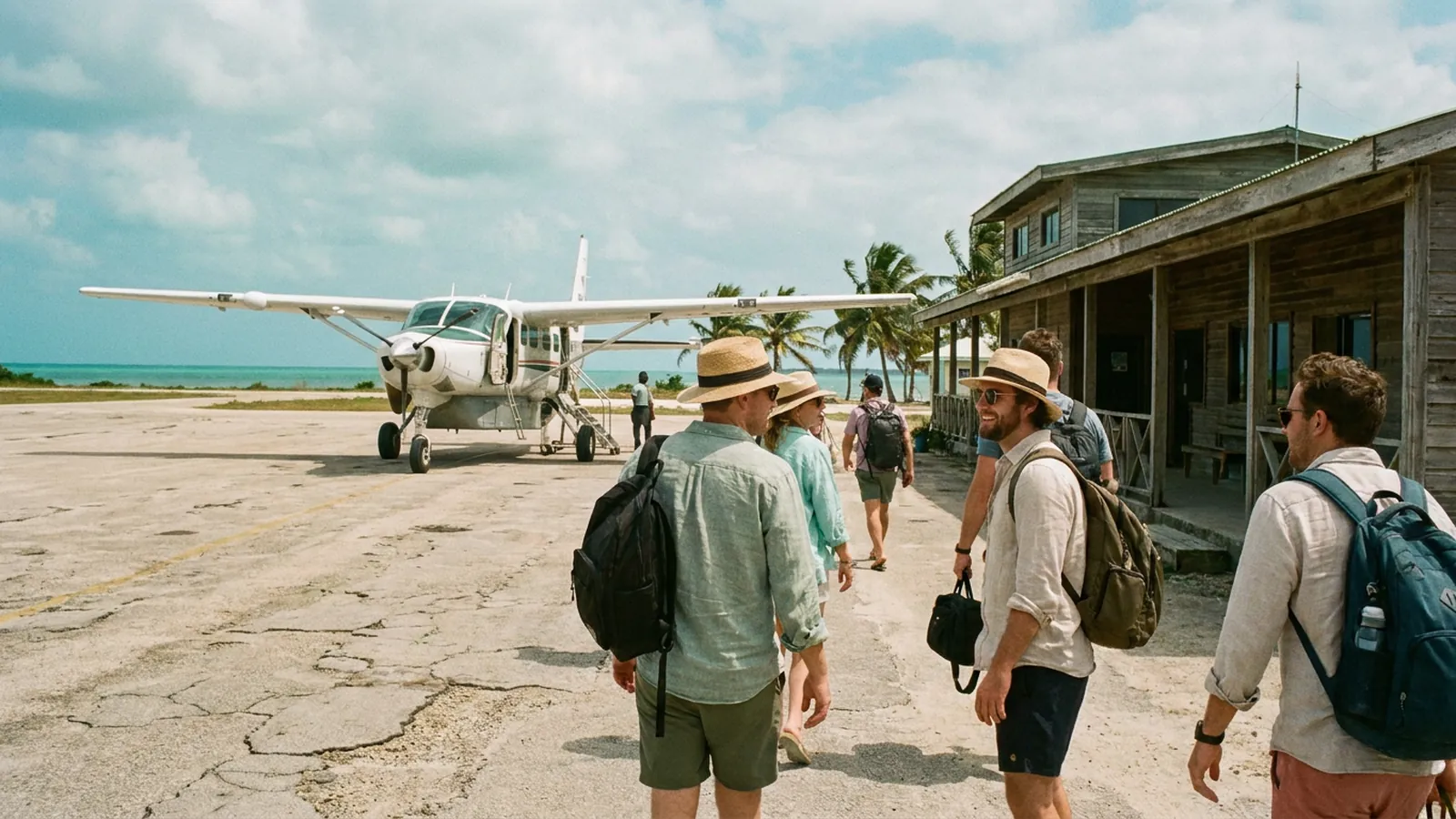
Most US visitors arrive through a handful of hubs — Houston, Dallas, Miami, Atlanta — and then face the part nobody explains well: what happens after Philip Goldson.
If you are in San Ignacio or out along the Cayo road, that is a shuttle and a couple of hours, and guests want to know who is driving and what it costs. If you are in Placencia or Hopkins, it is a domestic hop or a long drive, and the choice between them is a real decision with a real price difference. On Caye Caulker or in San Pedro it is a water taxi or a short flight, and people want to know the last departure of the day so they can pick their connecting flight.
Write that page as if you were answering it by email, because you probably answer it by email twice a week already. Name the hubs. Give the rough journey time in words. Say what you can arrange and what the guest books themselves. Put your WhatsApp number on it.
This is also the page that quietly sells the stay. Someone reading a clear, calm set of directions concludes that the rest of the trip will be handled just as calmly.
Built for a phone on an American network
Your guest is reading on an iPhone, on roaming, on a plane's wifi, or at a desk between meetings. The site needs to be quick, legible at a glance, and bookable with one thumb. A booking engine that only really works on a laptop loses the enquiry.
Your own domain matters too. A property website on its own address, with the photos, the rates and the guest data belonging to you, is an asset you keep. That is the thinking behind the website and booking engine we set up — your domain, your calendar kept in sync with the booking sites so you are not double-booked, and guests paying at the property or through your own Stripe for a deposit. We never hold the money.
Canada and Europe book differently
The next markets are smaller but worth shaping for.
Canadians, at 7.1%, behave a lot like the US market with longer lead times and a stronger winter pattern. Keep the US$ price visible; most will convert from that rather than from BZ$.
Europe is around 8.1% between the UK, Germany, France and the rest. These guests tend to plan further ahead, stay longer, read more before booking and ask more detailed questions by email before they commit. Month names written out in full, a proper written description of the rooms rather than photos alone, and a quick, patient reply to a long enquiry are what win them. An AI concierge that answers from your approved facts and hands the awkward ones to a person covers a good share of that overnight correspondence while you sleep.
Central America at 6.4% and Mexico at 1.5% are shorter-notice, more often drive-in or regional flights, and more price-sensitive — worth a Spanish-language line on your contact page if you serve them.
Start with the two pages that matter
You do not need to rebuild everything. Fix the rates page so both currencies appear, and write the getting-here page properly. Those two changes do most of the work.
If you want the rest handled — the site, the domain, the calendar sync — setup is typically done within a couple of weeks and there is no long-term contract. The pricing page sets out what that costs.
Sources
- 1.The San Pedro Sun — BTB 2025 tourism figures — 2025 overnight arrivals and the US share.
- 2.Breaking Belize News — 2025 overnight arrivals — year-on-year change in stopover numbers.
- 3.Tourism Analytics — Belize statistics — breakdown of stopover visitors by source market.
- 4.Central Bank of Belize — Exchange rate — the BZ$ to US$ peg.