AI concierge
WhatsApp gets opened, email gets kept. A practical guide for Belize hosts on which channel to use for arrival notes, confirmations and late-night questions.
Mark Noble, Direct Belize · 20 August 2026 · 5 min read

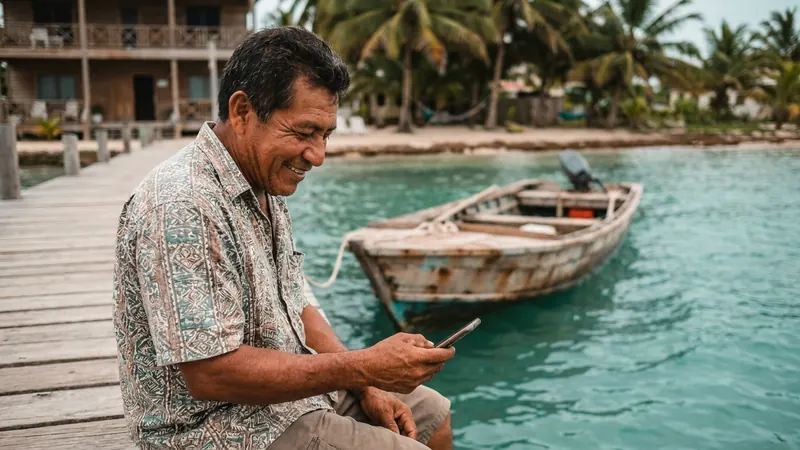
Ask any guesthouse owner in San Ignacio how they talk to guests and the answer comes back the same: WhatsApp. The driver from the airport is on WhatsApp. The tour operator in Cayo is on WhatsApp. The guest who landed an hour ago and can't find the turn-off is absolutely on WhatsApp.
So it's fair to ask whether email still has a job. It does — just a different one. The two channels fail in different ways, and once you see where each one falls down, deciding which to use stops being a matter of taste.
What the open rates actually tell you
WhatsApp messages are opened 92–96% of the time. Email sits at 18–22%.
That gap looks damning for email, but read it carefully. It isn't saying email is useless. It's saying that if a message must be seen, and seen soon, you cannot rely on email to do it. Four out of five of your emails are, at best, sitting unopened in a travel folder somewhere.
Now put that next to what guests expect. Research suggests 82% of travellers want an immediate reply — within about five minutes — when they message a business online, and 40% expect one inside the hour. Those aren't people checking email. Those are people with a phone in their hand, standing somewhere hot, waiting.
That's the whole case for WhatsApp in one sentence: it's where urgency lives.
Where each channel earns its keep
Here's the split that works for most small properties in Belize.
Use WhatsApp for anything time-sensitive or location-bound:
- Arrival instructions, especially the ones Google Maps gets wrong — "turn at the blue shop, not the first road after the bridge"
- Transfer and water taxi confirmations, and changes to them
- "We're running late, our flight from Houston is delayed"
- Early check-in requests, luggage storage, a question about dinner at eight
- Housekeeping or maintenance messages during the stay
- The quick nudge the morning of departure about the taxi time
Use email for anything the guest will need to find again:
- The booking confirmation with dates, rate and what's included
- Deposit receipts and the final bill
- Cancellation terms and house policies
- Longer pre-arrival notes: what to pack for Mountain Pine Ridge, what the road is like in the wet season, which tour needs booking ahead
- Post-stay receipts for the guest's expense claim
The test is simple. Will the guest need to search for this in three weeks? Email. Does it matter in the next three hours? WhatsApp.
If it has to be read now, send it on WhatsApp. If it has to be found later, send it by email.
Plenty of messages deserve both. A confirmation email with the full details, and a short WhatsApp two days before arrival saying "Looking forward to seeing you Thursday — here's the pin for the property, message us when you land." The email is the record. The WhatsApp is the reminder that the record exists.
The part nobody budgets for: replying at night
The open rate is the easy half. The hard half is that WhatsApp sets an expectation of speed, and a six-room place in Hopkins does not have a night desk.
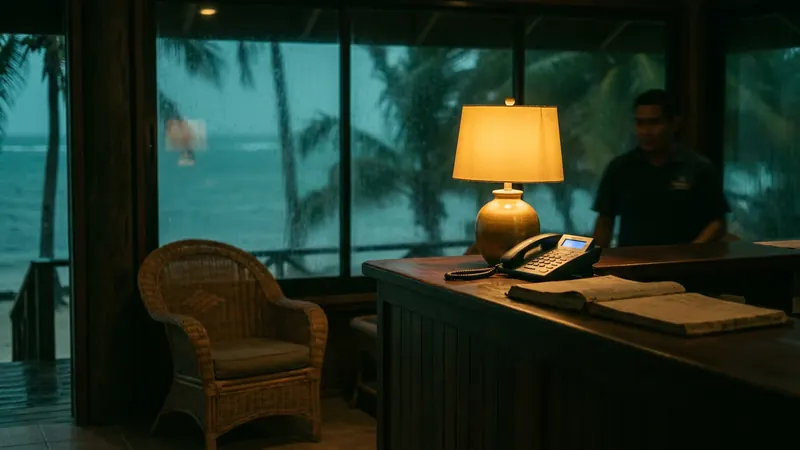
A guest lands at PGIA at nine in the evening, messages to say they're on the way, and nobody answers until seven the next morning. On email, that silence is normal. On WhatsApp, it reads as neglect — because everyone else in the guest's life replies to WhatsApp within minutes.
This is where some automation genuinely helps, and where it's worth being clear about limits. Hotel chat assistants are reported to handle more than half — over 52% — of routine questions without a person getting involved. Check-in time, wifi password, is breakfast included, how far to the Split, do you take card. Those questions don't need you. They need a correct answer at ten past nine on a Tuesday night.
The remaining questions always need you. A guest asking to move rooms, or disputing a charge, or explaining that the air conditioning has packed in — that's a person's job, and the handover needs to be quick and obvious.
How this works in Direct Belize
The guest journey in Direct Belize sends your pre-arrival and post-stay messages on either WhatsApp or email — you choose per message, so the confirmation goes by email and the arrival instructions go by WhatsApp, without you keeping two lists in your head. Upsell offers go the same way: an airport transfer, a late checkout, a tour in Cayo, sent at a sensible point in the run-up to arrival.
The AI concierge add-on answers on WhatsApp using only facts you've approved. If you haven't told it the pool closes at nine, it won't guess — it hands the conversation to staff instead. That matters more than it sounds. An assistant that invents an answer about your cancellation policy creates a problem you'll be sorting out at the front desk.
Everything else sits around it in the normal way: your own site on your own domain, 0% commission on bookings made there, one calendar synced across Booking.com, Expedia with Hotels.com, Airbnb, Vrbo and Google. The booking sites keep sending guests and keep earning their commission on those — the point is simply that the guest who found you on Booking.com last year and now messages you directly shouldn't cost you commission a second time.
Plans run BZ$119 a month for one to six rooms, BZ$279 for seven to fourteen, and BZ$479 for fifteen to twenty-five. Annual billing includes a month free and skips the BZ$499 setup fee; extra channels are BZ$29 a month each. No long-term contract, and setup is usually finished within a couple of weeks. The pricing page has the detail.
A reasonable place to start
You don't need to redesign your whole communications flow this week. Pick the three messages that cause you the most grief — probably arrival directions, the transfer confirmation and the checkout reminder — and move those to WhatsApp. Leave confirmations and receipts on email where guests can find them.
Then watch what happens to the number of "where are you?" phone calls. That's usually the number that moves first.
Sources
- 1.Zepic — WhatsApp vs email open rates — the 92–96% versus 18–22% open rate comparison.
- 2.Conduit — Hospitality chatbot statistics — share of routine guest questions handled without staff.
- 3.Heyy — Guest messaging expectations — traveller expectations on reply speed.
- 4.Direct Belize — Features — guest journey messaging and concierge behaviour.
- 5.Direct Belize — Pricing — plan prices, setup fee and included channels.