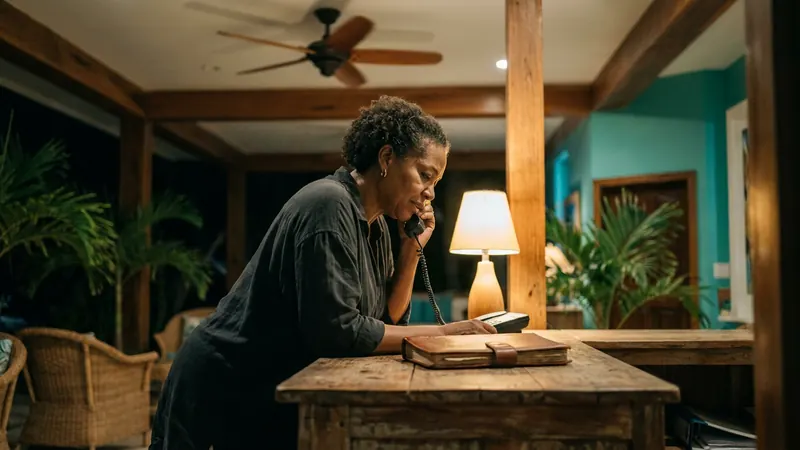
AI concierge
A guest messages at 2 a.m. asking about airport transfers. Here is what a well-built concierge should answer, what it must never invent, and when to wake staff.
Mark Noble, Direct Belize · 15 August 2026 · 6 min read
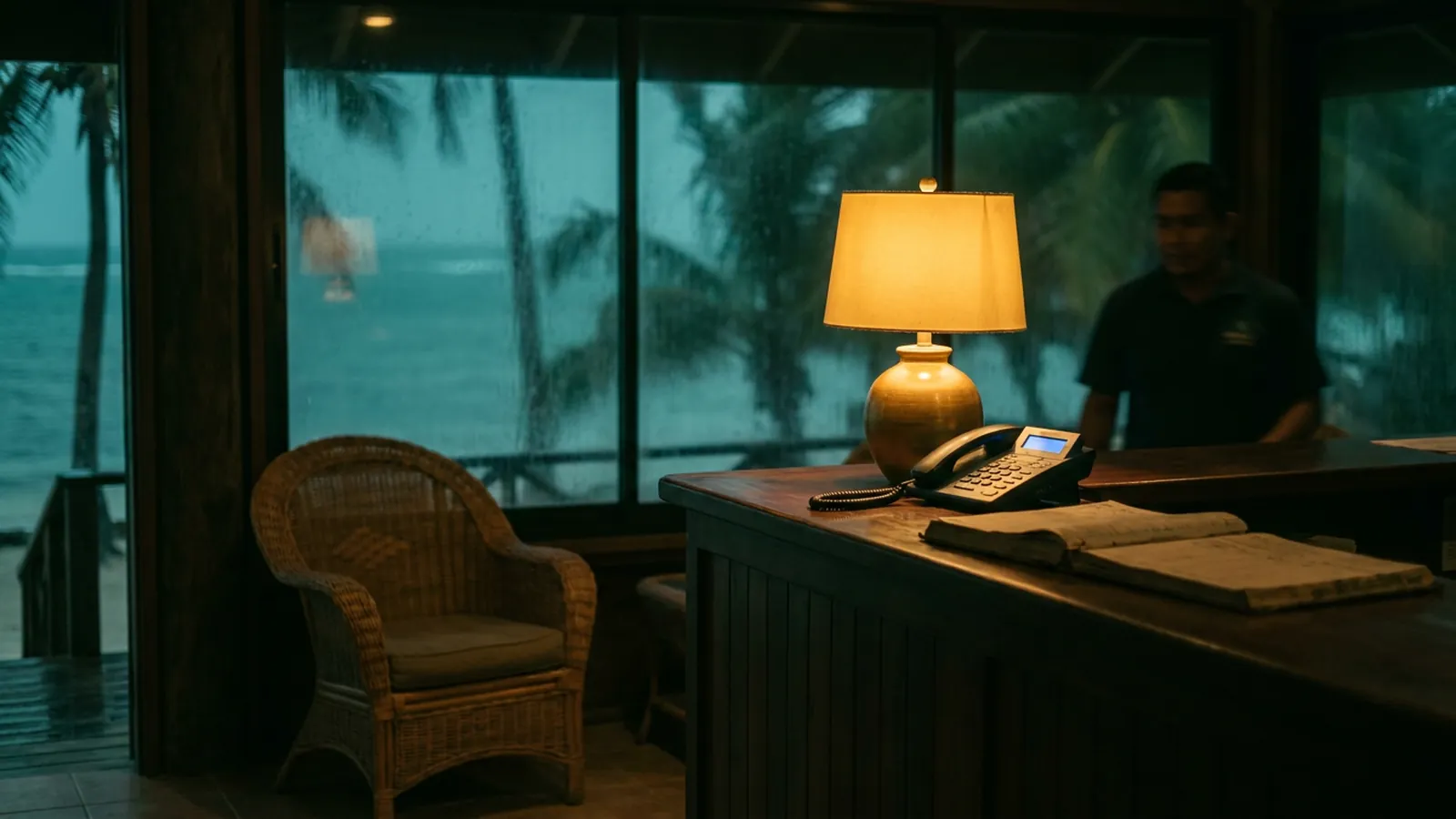
It is a quarter past two in the morning in Cayo. The generator is quiet, the dogs have settled, and the only light at reception is the lamp you leave on out of habit.
In Chicago it is early evening, and a woman who has been reading about your lodge for a week finally works up the nerve to ask a question. Can you arrange a transfer from the international airport? We land late afternoon and we have a child.
She is not being unreasonable. She simply has no idea what time it is in Belize, and she has three other tabs open with three other lodges.
What happens in the next five minutes decides quite a lot.
Why the small hours matter more than they used to
Travellers have learned to expect businesses to answer the way shops and banks answer. Studies of guest messaging report that 82% of travellers expect an immediate reply — within roughly five minutes — when they message a business online, and 40% expect one inside the hour.
That is not a standard any family-run guesthouse in Hopkins can meet with human beings alone. Nobody should be sitting up to answer a phone that chimes twice a night.
The same research reports that hotel chat assistants handle more than half of routine questions — over 52% — without a person involved. That number tells you something useful about the shape of the problem. Most of what arrives at 2 a.m. is not difficult. It is repetitive. Do you have a cot. Is the road to the property paved. Is breakfast included. How far is the beach. Do you take dogs.
The hard questions are a minority. The trick is a system that handles the easy ones properly and knows, reliably, which ones it is not allowed to touch.
What a good concierge actually does
A concierge worth having is not a clever conversationalist. It is a disciplined one.
It should answer only from facts you have approved. Not from the internet, not from a general impression of what Belizean lodges are usually like, and certainly not from whatever it can guess from your photographs. If you have told it that transfers from the international airport can be arranged with notice, that a driver meets guests in arrivals, and that staff will confirm the cost once they know the flight and the number of passengers — it can say exactly that, at 2 a.m., in your words.
It should sound like you. If your place in Punta Gorda is warm and unfussy, the reply should be warm and unfussy. If you always mention that the last stretch of road is rough in June, it should mention it too. Guests can tell the difference between a reply written in your voice and a generic one, and the generic one costs you the booking.
It should answer instantly, in the language the guest wrote in, and then it should get out of the way.
And it should move the conversation forward. The woman in Chicago does not want a brochure. She wants to know that someone will be standing in arrivals with her name on a card. A good answer ends with a small, concrete next step — check the dates on the site, send the flight number, reply here and staff will confirm in the morning.
What it must never do
This is the part that matters more than the clever part.
- Never invent a price. Not a transfer fee, not a rate for a room type it hasn't been told about, not "around BZ$—" because that sounds helpful. A guest quoted a number at 2 a.m. will hold you to it at check-in, and they will be right to.
- Never promise a room. Availability belongs to the calendar and the booking engine, not to a chat window. The concierge can point at the booking page. It should not say "yes, we have space that week."
- Never make up a policy. Cancellations, deposits, children, pets, visiting guests, what happens if a flight is delayed — if you haven't written it down, the concierge doesn't know it, and it should say so.
- Never guess about a third party. Tour operators, taxi drivers, the ferry to Caye Caulker, the opening hours of a cave. Unless you've approved the fact, it isn't a fact.
- Never handle money. With Direct Belize, guests pay at the property, or leave a deposit through the property's own Stripe account. We never hold your money, and the concierge never asks a guest for card details in a chat.
The most valuable sentence an AI concierge can say is: I'm not certain about that, and I'd rather not guess — let me get someone to confirm in the morning.
That sentence costs you nothing. A fabricated transfer price costs you an argument at reception and a one-star review about bait-and-switch.
The hand-off, done properly
When the concierge doesn't know, three things should happen at once.
The guest gets an honest reply, with a realistic expectation of when a person will respond. Not "someone will be right with you" at 2 a.m. — more like: staff are offline overnight in Belize, and you'll hear back first thing.
Staff get an alert, so nobody has to go hunting through a chat log in the morning. The question is waiting for whoever opens the laptop in San Ignacio at seven, with the guest's dates and context attached.
And the thread stays in one place. The same conversation that started at 2 a.m. continues when your manager replies, so the guest isn't re-explaining her flight time to a second stranger. That continuity runs on into the pre-arrival and post-stay messages too — same thread, same voice, WhatsApp or email.
You can see how the AI concierge is set up, including how the approved facts are written and edited.
What this is actually for
It is easy to think of overnight answering as a service nicety. It is better to think of it as where direct bookings are won or lost.
The woman in Chicago has your lodge in one tab and two OTA listings in others. If your site answers her in a minute and the others answer her in a day, she books with you — and that booking costs you nothing in commission.
The booking sites are not the problem. They found guests who had never heard of you, and they earn their cut on those guests fairly. The problem is paying commission on someone who had already chosen you, had one small question, and couldn't get it answered.
Operators who add a direct booking engine alongside guest messaging report shifting 15–30% of their bookings from the OTAs to direct over time. That is what operators report, not a promise — results vary with the property, the market and how well the facts are written. But the direction is consistent, and it starts with being answerable.
Writing the approved facts is a morning's work: your room types, your policies, your transfer arrangements, the things you say twenty times a week anyway. After that, the lamp at reception can keep burning on its own.
If you want to see what setup involves and what it costs, the pricing page lays it out plainly. No long-term contract, and the site, domain and data stay yours.
Sources
- 1.Conduit — Hospitality chatbot statistics — share of routine guest questions handled without a person.
- 2.Heyy — Guest messaging expectations — how quickly travellers expect a reply when they message a business.
- 3.Heeya — Direct booking case notes — reported shift from OTA to direct bookings.
- 4.Conferbot — Hotel chatbot results — operator-reported results from hotel chat assistants.
- 5.Direct Belize — Features — what the concierge, messaging and booking engine do.