Admin, help & guided tour
Why one shared password is a risk for a small Belize property, how page-level permissions work, and a role setup you can copy for a family-run lodge.
Mark Noble, Direct Belize · 8 September 2026 · 6 min read
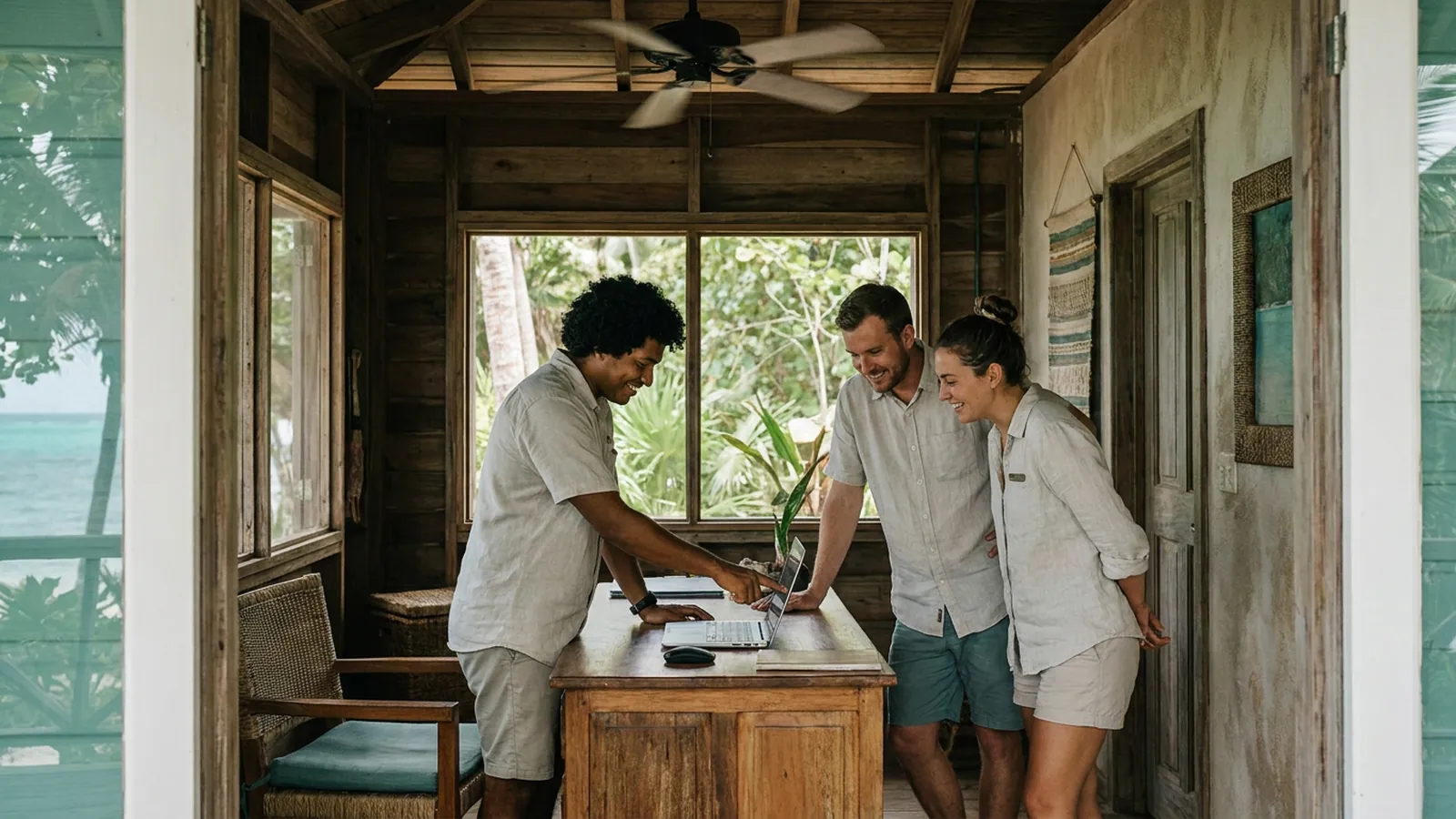
Most properties in Belize are small and family-run — guesthouses, lodges and resorts with fewer than 40 rooms, where the owner also does the books and sometimes the airport run. In a place like that, systems grow by habit. One person sets up the booking software, picks a password, and tells everyone else. Within a year that password is written inside a drawer at reception, known to two people who left last season, and typed in by whoever happens to be on shift.
It works, until it doesn't.
What actually goes wrong with a shared login
Nobody shares a password out of carelessness. They share it because it's quicker, and because the alternative — setting up accounts, explaining them, resetting them — feels like an afternoon you don't have.
But a shared login costs you in four quiet ways.
- You can't tell who did what. A booking disappears from the calendar on a Tuesday. Was it cancelled by the guest, deleted by mistake, or moved to another room? With one login, the history says only "admin". With separate accounts, it says a name and a time, and the conversation takes two minutes instead of an afternoon.
- Everyone has the power to break everything. The housekeeper who only needs to mark rooms clean can also change your rates. Not because they want to — because the button is there, and the screen is small, and the fan is blowing the paper off the desk.
- Leaving is messy. When a seasonal front desk person finishes in May, you either change the password and re-tell four people, or you don't change it at all. Most properties don't change it.
- Guest data sits wider than it should. Names, phone numbers, arrival dates, sometimes deposit records. That information belongs to your guests, and the fewer people who can export it, the better.
None of this is dramatic. It's just slow, unnecessary friction that lands on the owner.
Page-level permissions, in plain terms
Direct Belize gives staff their own logins, and each login is set page by page with three levels: view, edit, delete.
That's the whole idea. For every page your property has switched on — bookings, rooms, housekeeping, messages, pricing, marketing, settings — you choose whether a given person can look at it, change things on it, or remove things from it.
A few examples of how that plays out in practice:
- Your front desk person gets view and edit on bookings, so they can take a phone reservation from a family in Belmopan and move a guest from one cabana to another. They get no delete, so a cancellation becomes a status change you can see, not a row that vanishes.
- Housekeeping gets view and edit on the rooms board only. They mark rooms dirty, clean, inspected. They never see a rate, never see a guest's phone number, never land on the settings page by accident.
- Your manager in Placencia gets edit rights on pricing, so they can approve the suggested rates when the market data shows San Pedro and Hopkins moving ahead of you for Easter week. The suggestions are never applied automatically — somebody always presses the button — so it matters who that somebody is.
- Delete rights on bookings and settings stay with you, and perhaps one other person you'd trust with the safe.
The useful question isn't "do I trust this person?" It's "what does this person need open in front of them at 7am?"
Most mistakes in small properties aren't dishonesty. They're a tired hand on a laptop during check-in rush. Permissions are there to keep the dangerous buttons off the screen of someone who has no reason to be near them.
A role setup you can copy
Here's a sensible starting point for a family-run lodge in Cayo with a handful of cabanas, two housekeepers and a part-time front desk.
Owner (you). Full view, edit and delete on everything, including settings, channel connections and the Stripe deposit setup. One account, your own, not shared with your spouse unless you genuinely want the audit trail to be ambiguous.
Second owner or manager. View, edit and delete on bookings, rooms and messages. View and edit on pricing and marketing. View only on settings. They can run the property without you for a fortnight; they can't disconnect your calendar sync while you're on a boat to Caye Caulker.
Front desk. View and edit on bookings, rooms and guest messages. No delete anywhere. No access to pricing or settings. They can take over a conversation from the AI concierge when a guest asks something it hasn't been given facts for, which is exactly where you want a human.
Housekeeping. View and edit on the housekeeping board. Nothing else switched on. If they use a phone rather than the office laptop, this is the difference between a tool they'll actually use and one they'll ignore.
Tour guide or driver, if you have one. View only on bookings, so they can see tomorrow's arrivals and pickups without touching a thing.
You can set all of this on the staff logins and permissions page, and change it again in October when the season's shape changes.
The guided tour, and why new people stop asking you things
The second half of the problem is training. You can give someone the right access and still lose a week to "where do I find…".
Every new user gets a guided tour the first time they log in. It walks them through the pages your property has actually switched on — not a generic demo of features you don't use — pointing at each screen and explaining what it's for and what they're expected to do there.
They can skip it, go back a step, or jump to a particular page. If they skip it on Monday and panic on Thursday, they can start it again.
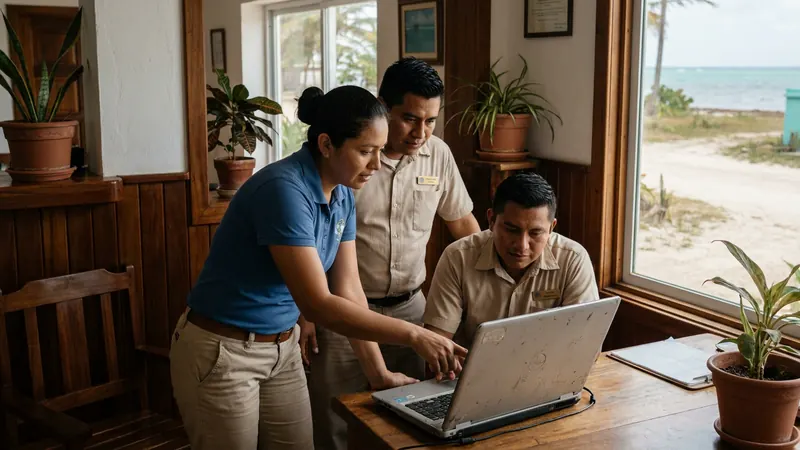
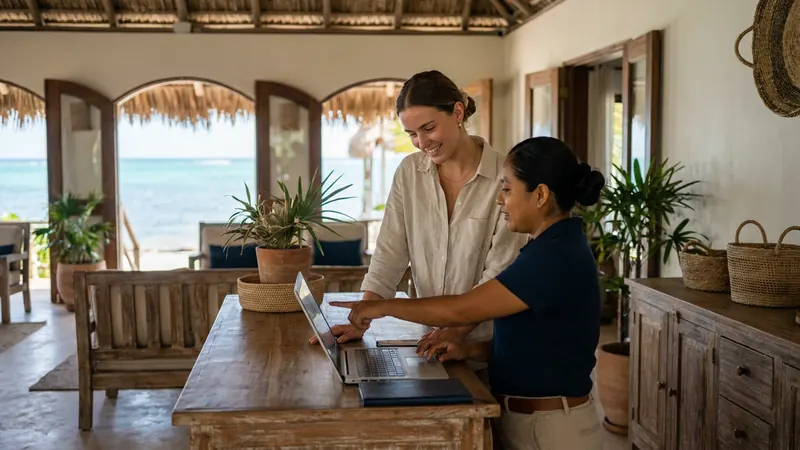
What this means for you: a new front desk hire in San Ignacio sits down, logs in with their own account, and gets shown the bookings page, the rooms board and the message inbox. Not pricing, because they don't have it. Not settings, because they don't have those either. The tour matches their permissions, so nothing they're shown is something they can't do.
It's a small thing that saves the same twenty minutes every time somebody joins — and in a seasonal business, somebody joins fairly often.
Getting it set up
Setup for a new property is typically done within a couple of weeks, and staff accounts are part of that conversation rather than an afterthought. It's worth arriving with a list: who does what, and what each of them needs open.
If you're not sure how to split the roles for your particular property, get in touch and we'll work through it with you. Bring the names of the people on shift next week — that's usually enough to build the whole thing.
Sources
- 1.Belize Hub — Accommodation in Belize — background on the size and family-run character of most Belizean accommodation.
- 2.Direct Belize — Features — details of staff logins, page-level view/edit/delete permissions and the guided tour.