Guest journey & upsells
How to ask for a review at the right moment with your own Google and TripAdvisor links, and how to keep one tone of voice when three people answer them.
Mark Noble, Direct Belize · 3 November 2026 · 5 min read
The guests who left on Sunday are already back at work. They had a good week — the tour to Caracol went well, the kitchen made the breakfast they asked for, nobody got rained out. They meant to write something. By Wednesday the week has closed over the top of it and they never will.
That gap, between the goodwill a guest leaves with and the review that never gets written, is the most ordinary lost opportunity in a small Belizean property. It isn't a service problem. It's a timing problem, and it's fixable with one message.
Ask while the sand is still in the bag
The practical window is short. Ask at check-out and you're competing with the shuttle, the bill and the last bathroom trip. Ask two weeks later and the memory has flattened into "Belize was lovely" — too vague to be worth typing.
The useful moment is a day or two after they've gone. The journey is done, the photographs are on the phone, and the guest has enough distance to have an opinion but not so much that the details have gone.
A post-stay message in Direct Belize goes out on that schedule by itself, over WhatsApp or email, with your own Google and TripAdvisor links in it. That last part matters more than the wording. If a guest has to go and search for you — and there are three places in Hopkins with similar names — most of them simply won't. A link they can press while they're waiting for coffee is the whole difference.
It sits in the same run of automatic messages as the confirmation, the pre-arrival note and the arrival-day message, so it isn't a separate task anybody has to remember on a Tuesday. You can see how the guest journey messages are put together if you want the detail.
Where those reviews actually do their work
Reviews pay you back in two places at once, and the second one is the one owners tend to forget.
The first is the booking sites. A property with recent reviews and visible replies looks attended to. Guests reading your listing see an owner who turned up, and the booking sites themselves take notice of properties that engage. Nobody can promise you a position in a search result, and you should be wary of anyone who does — but a silent listing certainly isn't helping itself.
The second is Google. Your Google profile is often the first thing a traveller sees after a friend recommends you by name, and search traffic to hotel sites is reported to convert at roughly 3–8%, against 1–3% for Meta ads. Those are the people already looking for you specifically. A good, current set of Google reviews is what they find at the moment they're deciding, and the path from there runs to your own booking page rather than through a commission.
The booking sites earn their commission on the guests they genuinely find for you. The guest who heard about your lodge from a cousin and typed your name into Google isn't one of those. Reviews are part of how you make sure that guest ends up on your own site.
When the review arrives, you still have to answer it
Which brings you to the harder half. Review requests are easy; replies are where the discipline goes.
Paste the review into the admin and you get a reply draft in your property's voice — warm where the review is warm, specific where the guest was specific, steady where the guest was annoyed. Then you read it. You change the bits that are wrong, add the thing only you know (that it was Miss Alma who made the fry jacks they mentioned), and post it yourself.
It stays a draft on purpose. Nothing is posted on your behalf. The same approach runs through the rest of the system — price suggestions that staff approve one by one, social captions and ad drafts that a person signs off before anything goes out. A reply to a guest who was disappointed about the generator at two in the morning is not something a machine should send without a human reading it first.
A draft gets you past the blank box. The judgement stays with you.
What it really removes is the delay. The reason replies go unwritten is not that they're difficult, it's that staring at an empty reply field at the end of a long day is unappealing enough to put off until tomorrow, and then the day after.
Three people, one voice
A two-room guesthouse in Corozal has one voice because one person writes everything. A 25-room hotel in San Pedro has a front desk manager, an owner and someone doing marketing, and all three will at some point reply to a review.
Left alone, that reads as three different properties. One person is formal, one writes in fragments, one over-apologises for things that weren't anybody's fault. Guests reading down the page notice, even if they couldn't say what they noticed.
Working from drafts built on the same voice pulls those three closer together. The front desk manager's reply on Tuesday sounds like the owner's reply on Friday. Each of them still edits — they should — but they're all starting from the same place.
The staff side of this is just permissions. Direct Belize gives each person their own login with view, edit, create and delete set per area, so the marketing person can handle reviews and campaigns without seeing the payouts report. The same admin runs a 1–6 room guesthouse and a 15–25 room hotel; what changes is how many logins are in use, not the system underneath. The plans are split on room count for that reason.
A quiet habit, not a project
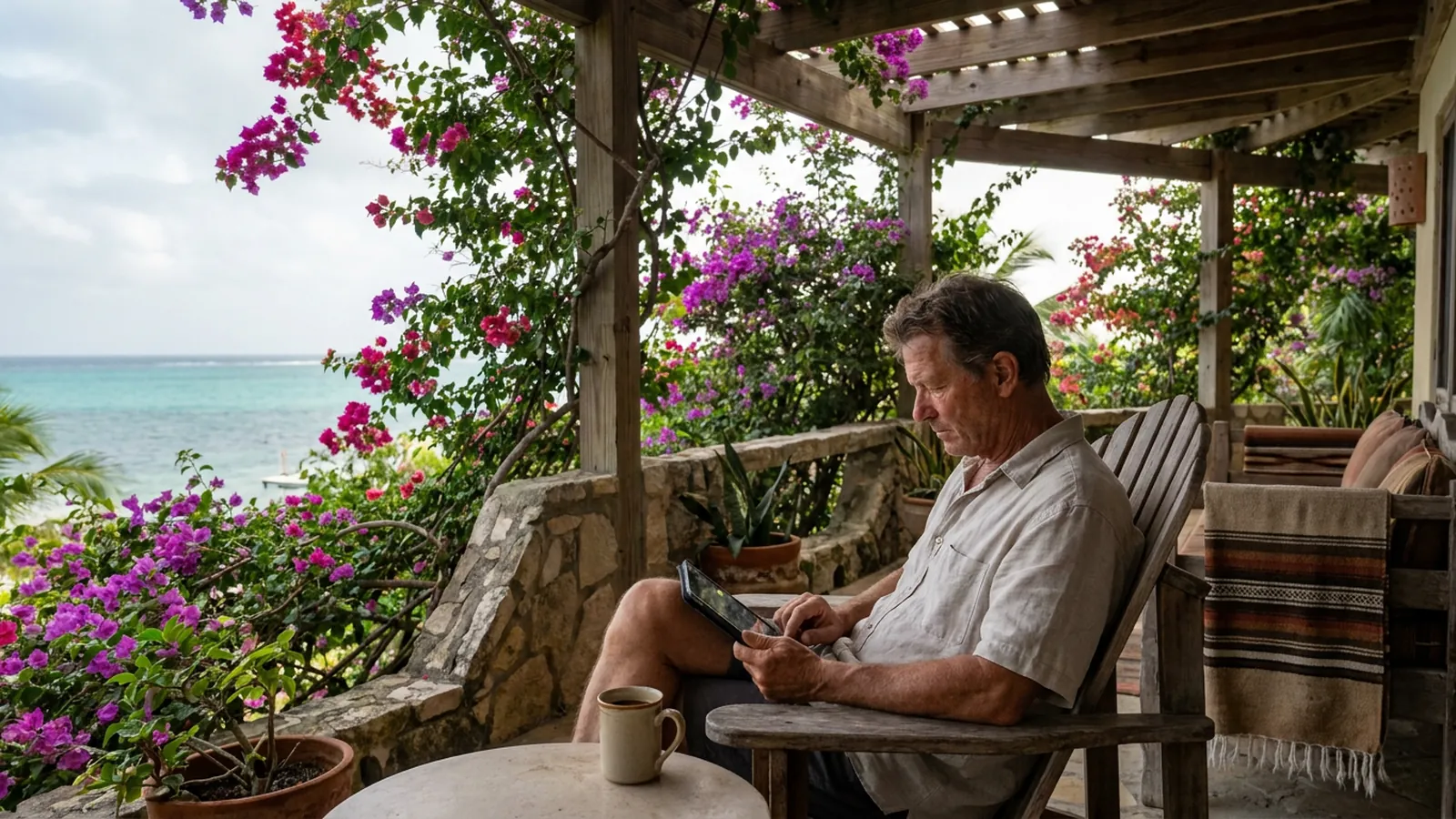
None of this is dramatic. The message goes out on its own two days after departure with your links in it. The reviews arrive a bit more often than they used to. Somebody sits with a coffee on the terrace in the morning, works through the new ones, edits three drafts and posts them.
Twenty minutes a week, and a year later your listings in Placencia or San Ignacio read like a place where someone is paying attention. Which, by then, is simply true.
Sources
- 1.Direct Belize — Features — post-stay review requests with Google and TripAdvisor links, AI reply drafts, and staff permissions.
- 2.Direct Belize — Pricing — plan tiers by room count and how the same admin scales from a guesthouse to a 25-room hotel.
- 3.GetHostAI — Hotel marketing conversion benchmarks — reported conversion rates for hotel search traffic against paid social.