Belize market
Belize's headline visitor numbers mix cruise callers with overnight guests. Here is the figure that matters for small hotels, and what to do about it.
Mark Noble, Direct Belize · 10 October 2026 · 5 min read
Every few months a tourism figure makes the rounds in Belize, and somebody in a WhatsApp group forwards it with a note like "good year coming". Then you look at your own occupancy for the same period and wonder whether you read it wrong.
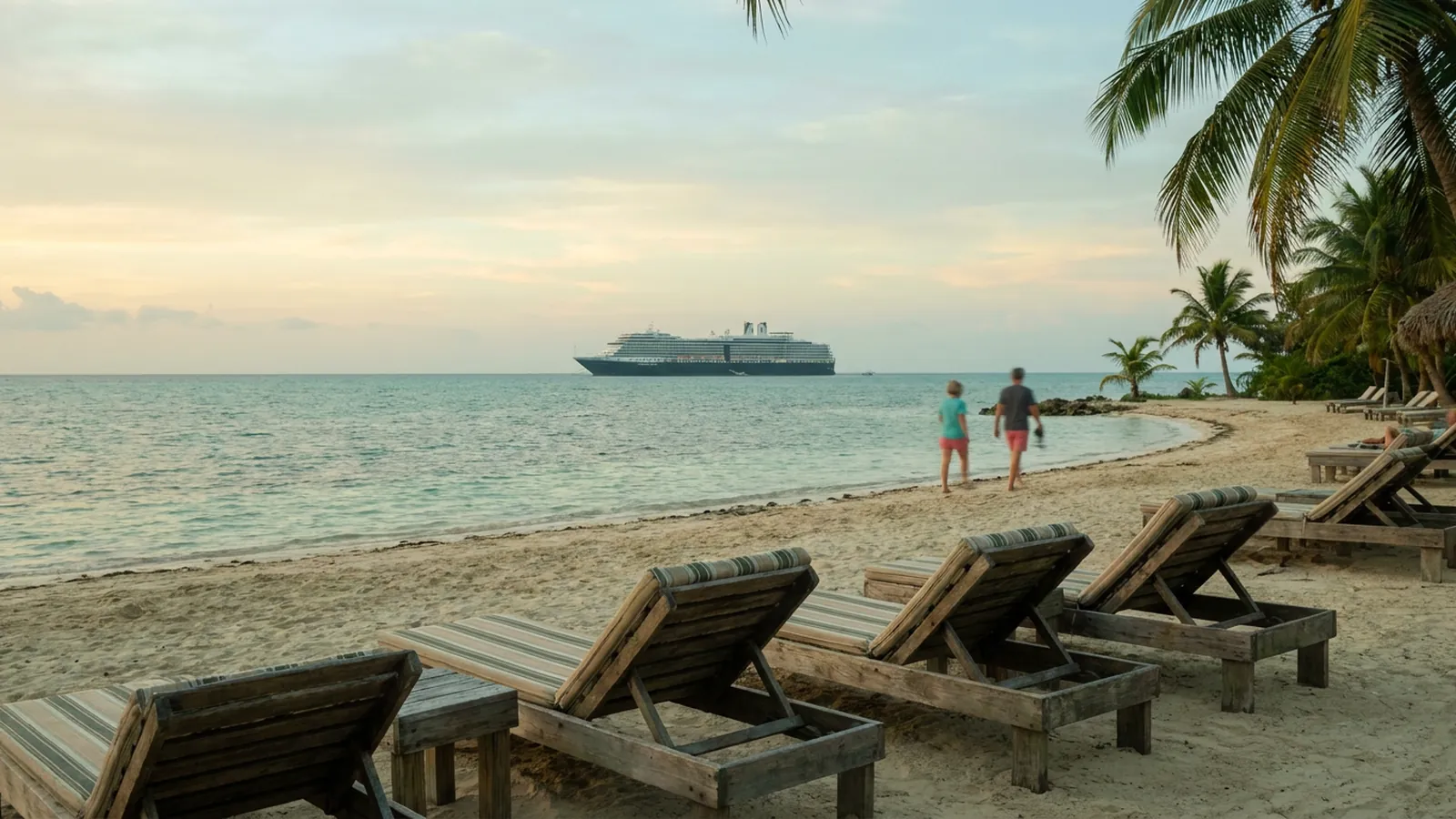
Usually you didn't. The headline number often bundles two very different kinds of visitor: the cruise passenger who steps off a tender, buys a souvenir and a rum punch, and is back aboard by four; and the overnight guest who needs a bed, a key and breakfast. Only one of those pays for a room.
If you run a guesthouse in Hopkins or a twelve-room lodge outside San Ignacio, the cruise figure is background noise. The overnight figure is your market.
The number that matters is the smaller one
Belize recorded roughly 551,700 overnight arrivals in 2025, up 0.8% on the year before, according to the Belize Tourism Board.
That's the pool. Everyone with rooms to sell in Cayo, Placencia, Hopkins, San Pedro, Caye Caulker, Corozal and Punta Gorda is working from the same pool, and it grew by well under one per cent.
Growth of 0.8% is not a collapse and it isn't a boom. It's roughly flat with a slight lean forward. In practical terms it means the market will not quietly hand you a better year. Whatever improvement you see in your own numbers next season will come from your share of those arrivals, not from the tide rising.
That's a different planning conversation than "tourism is up". It points at the things you control: how guests find you, what they pay, how many of them book you straight rather than through somebody else, and how much of each booking you actually keep.
Where those guests come from
The source-market split is worth knowing because it shapes everything from your website copy to the hour your messages arrive.
In the last complete year of detailed figures, stopover visitors broke down roughly like this: 64.8% from the United States, 7.1% from Canada, about 8.1% from Europe (3.1% UK, 1.9% Germany, 1.4% France), 6.4% from Central America and 1.5% from Mexico. The BTB's 2025 count put the US share at 59.4%.
Round it off and about six in ten of the people who sleep in Belizean rooms are American.
A few things follow from that:
- Your prices should be legible to someone thinking in US dollars. Many properties quote in BZ$ and note the fixed exchange rate plainly on the page. Either way, don't make a guest do mental arithmetic while deciding.
- North American travellers are used to booking on a phone, at night, on their own schedule. If your enquiry process depends on someone in Belize being awake to reply, you lose bookings you never hear about.
- Canada and Europe together are a meaningful slice, and they behave differently: longer stays, longer lead times, more questions before booking. Worth answering those questions properly on the site rather than one email at a time.
- Central American visitors, at 6.4%, are a real market for Corozal, Belmopan and the border towns, often booking much closer to arrival.
A flat pie means share is the whole game
Here's where the commission arithmetic gets uncomfortable.
Online travel agencies typically keep 15–18% of the nightly rate on the bookings they bring. Booking.com's standard commission sits around 15%; Expedia's runs 18–22%. Both rise if you join a visibility programme such as Preferred Partner.
That is money well spent on the right guest. The couple in Minnesota who had never heard of your lodge, found it on a listing page among forty others and booked — the OTA earned that. Nobody sensible is arguing you should delist.
The problem is the other guest. The one who was sent by a friend who stayed last March. The one who saw your reef trip on Instagram. The one returning for a third time. The one who read about Hopkins in a magazine and searched your name. That guest was always coming to you, and if the only place they can complete a booking is a listing page, you pay commission on a sale you'd already made.
The OTAs should be paid for the guests they find. They shouldn't be paid for the guests who already found you.
When the overall market is growing by 0.8%, shifting a portion of your already-committed guests from a commissioned channel to your own booking page is one of the few levers that moves income without a single extra arrival. Same rooms, same rates, more of each booking stays with you.
The practical step
None of this requires a strategy document. It requires that an overnight visitor — most likely American, probably on a phone, possibly at eleven at night their time — can find your property by name, see real availability, and confirm a room without waiting for a reply.
That means three things in order:
- A website on your own domain, with your own booking page, that works on a phone.
- One calendar behind everything, so a direct booking closes the same night off the listing sites and you never double-book.
- Someone or something answering the practical questions — airport transfers, children's rates, whether the road is passable in rain — at the hour the guest is asking.
That's what we built Direct Belize to do, and you can see the whole list on our features page. Guests pay you at the property, or a deposit through your own Stripe account; we never hold the money. The site, the domain and the guest data are yours, there's no long-term contract, and setup usually takes a couple of weeks. If you want to know what it costs before anything else, that's on the pricing page.
The pie isn't growing much this year. Your slice of it still can.
Sources
- 1.The San Pedro Sun — BTB 2025 tourism figures — 2025 overnight arrivals and year-on-year change.
- 2.Breaking Belize News — 2025 overnight arrivals — US share of 2025 stopover visitors.
- 3.Tourism Analytics — Belize statistics — source-market breakdown by country and region.
- 4.RateGain — Hotel direct booking vs OTA — typical OTA commission ranges.
- 5.RevPAR Genius — Direct bookings vs OTA commission 2026 — commission rates and visibility programmes.