OTA sync
How the Publish step works in Direct Belize, what gets pushed to the booking sites, and a short checklist for changing rates before high season.
Mark Noble, Direct Belize · 13 August 2026 · 6 min read
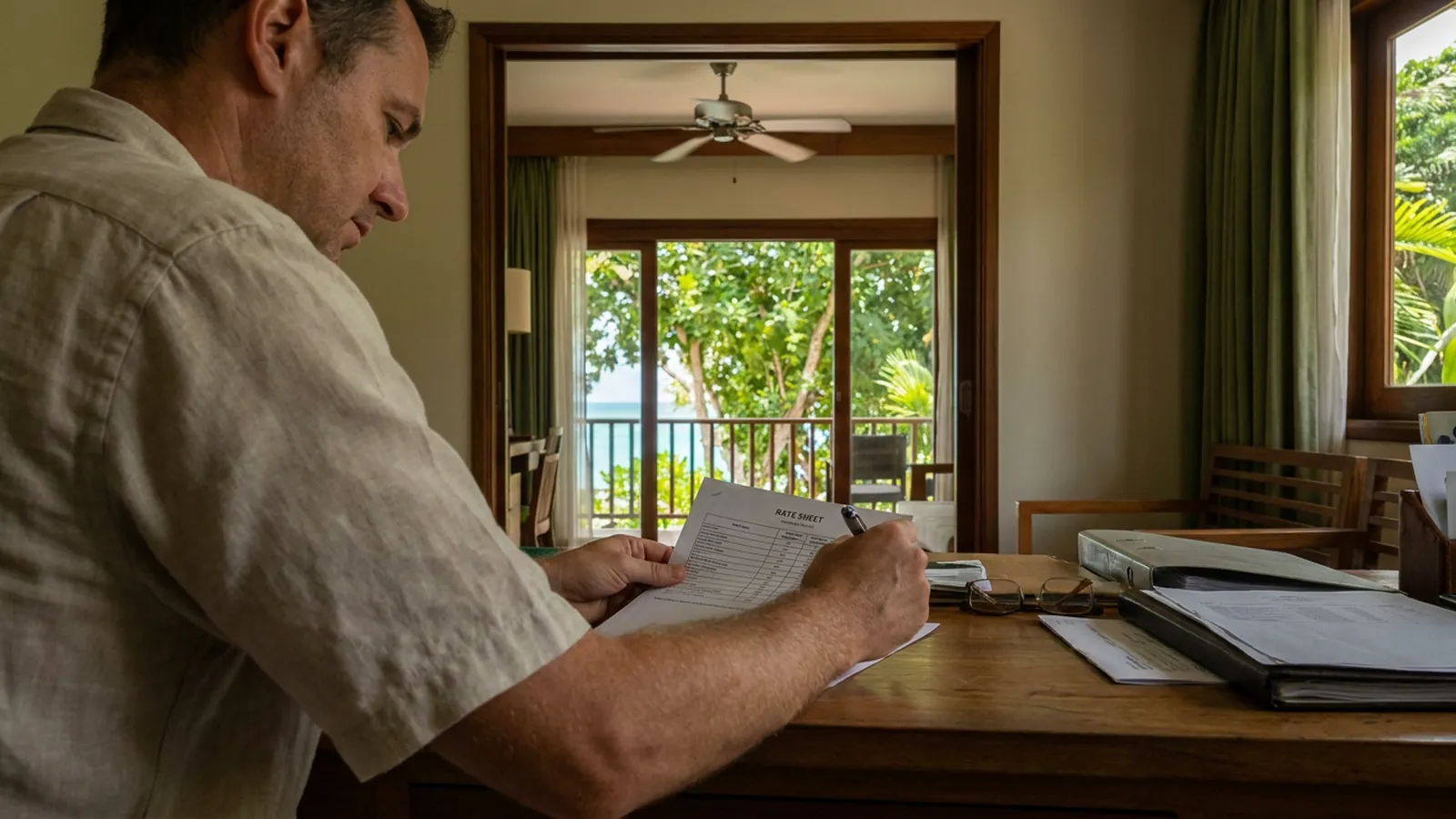
A guesthouse owner in San Ignacio rang us in November. She had sat down one evening, worked out her Christmas rates, typed them into her admin, and gone to bed pleased with herself. Three weeks later a booking came through at the old green-season rate for the week between Christmas and New Year.
Nothing was broken. She had made the change, looked at it on screen, and closed the laptop. What she hadn't done was press Publish.
It is one of the most common misunderstandings we see, and it is worth explaining properly, because the cost of it lands on exactly the nights you can least afford to sell cheaply.
Edits are drafts until you publish them
In Direct Belize, when you change a rate, close a date, adjust a minimum stay or mark a room out of service, that change is saved as a draft. It sits in your admin. You can see it, edit it again, show it to your partner over dinner, and change your mind.
It does not go anywhere until you publish.
This is deliberate. Rate work is rarely done in one sitting. You start on the deluxe rooms, the phone rings, a supplier arrives, someone needs the key to the store room. If every keystroke went straight out to the booking sites, half-finished work would be live for the hours or days it took you to come back to it. A January rate applied to the wrong room type, published instantly, is a problem you then have to chase across several sites.
So the draft state is doing something useful. It gives you a place to be halfway through.
The cost is that you have to finish. Draft work that is never published is the same, to the outside world, as work you never did.
A change you can see on your own screen is not a change the booking sites can see.
What travels when you press Publish
Once you publish, your rates, availability and closures go out to every connected booking site, and to your own direct booking site on your own domain. One calendar, pushed outward.
That means:
- A closed date closes everywhere, not just on your own site.
- A new nightly rate replaces the old one on the channels that take rates from you.
- A minimum stay you set for Easter applies across the connected sites.
- A booking that arrives from any source reduces availability everywhere, so the last room doesn't sell twice.
The practical effect is that you stop keeping a mental list of "and now I must go and do the same thing on three other extranets". You do the work once, check it, and publish.
The booking sites still do their job, and they still earn their commission on the guests they bring you. That is a fair trade. What you are avoiding is a different problem: being out of date on a channel, or paying commission on a night you'd have sold anyway at a better rate.
You can see how the sync side fits together on the OTA sync feature page.
A checklist before high season
Belize's high season runs December to April, with Christmas, New Year and Easter the busiest weeks. The green season, June to November, is quieter and brings more price-sensitive travellers. So the big rate change of the year usually happens in the autumn, and it is worth doing it slowly, with a cup of coffee and nobody else in the office.
Here is the order we suggest.
- Set the season dates first. Decide where high season starts and ends for your property before you touch a single price. Write it down.
- Do the peak weeks separately. Christmas–New Year and Easter are not simply "high season". Handle them as their own block, with their own minimum stay if you use one.
- Work room type by room type. Finish the standard rooms completely, then the deluxe, then the cabañas. Jumping between types is how one gets missed.
- Check your minimum stays and closures. If you close arrivals on certain days over the holidays, set that now rather than later.
- Look at the market before you commit. Direct Belize shows Belize market and competitor rates in BZ$ and suggests prices, but a member of staff has to approve them. Nothing changes on its own.
- Read it back as if you were a guest. Pick three dates across the season and look at what a traveller would be quoted.
- Then publish. And confirm, on the channel's own extranet, that the dates you care about most now show what you expect.
That last step takes a few minutes and it settles the question for the rest of the season.
The two mistakes that leave a night under-priced
Almost every under-priced high-season night we have looked into comes down to one of two things.
The first is an unpublished draft. The owner did the work, got interrupted, and the draft is still sitting there. The fix is a habit: never leave the admin without either publishing or deliberately deciding to leave it in draft. If you are leaving it, tell whoever covers for you.
The second is a date range that stops short. Someone sets the high-season rate from mid-December and ends it a few days too early, or starts the new rate on the first of the month when the holiday traffic really begins before that. The gap is small, so nobody notices it on screen. Then a booking lands in the gap at last season's price.
Both mistakes are caught by the same small act: after publishing, search your own site for a date inside the range, a date at each edge, and a date just outside. Four quick searches. If the edges look right, the middle almost always is.
Decide who holds the button
If more than one person touches rates, the permissions matter. Staff logins in Direct Belize carry page-level view, edit and delete permissions, so you can let your front-desk manager update availability and closures while keeping rate publishing with you, or with whoever genuinely owns the pricing decision.
That is not about mistrust. It is about knowing, in March, who changed the Easter rate and when. A property in Placencia with three people in the admin and no clear owner of pricing will eventually have an argument it doesn't need.
Setup for a new property is typically done within a couple of weeks, there is no long-term contract, and the website, domain and data belong to you. If you want to talk through how your seasons and room types would be arranged before high season arrives, get in touch and we'll walk through it with you.
Sources
- 1.Belize Travel Insider — When to visit Belize — the seasonal pattern behind the autumn rate change.
- 2.Direct Belize — Features — what the sync, pricing suggestions and staff permissions actually do.